
Protest, political defiance, and architectural genius—how the Western Region built the "Africa's Most Beautiful Campus."
In our exploration of Nigeria’s foundational institutions on kpeki.space, we have looked at how communities and regions hack their way through development crises. We saw it in the way local fabricators engineer agricultural machinery out of scrap material, and we saw it in the rapid, strategic fusion of colonial colleges that gave birth to Ahmadu Bello University in Zaria. But if ABU was a story of urgent regional stabilization, the creation of the University of Ife—now Obafemi Awolowo University (OAU) was an act of pure ideological defiance and intellectual protest.
To understand why OAU exists, you have to understand the deep political friction of the late 1950s. The Western Region of Nigeria was, by most economic metrics, the most progressive and financially robust enclave in the country, largely driven by its booming cocoa economy and the landmark Free Universal Primary Education (UPE) program. Yet, its brilliant young minds were being systematically choked out of higher education. The establish-from-scratch journey of OAU is a masterclass in how a clear-headed vision can transform regional frustration into a world-class, culturally grounded academic empire.

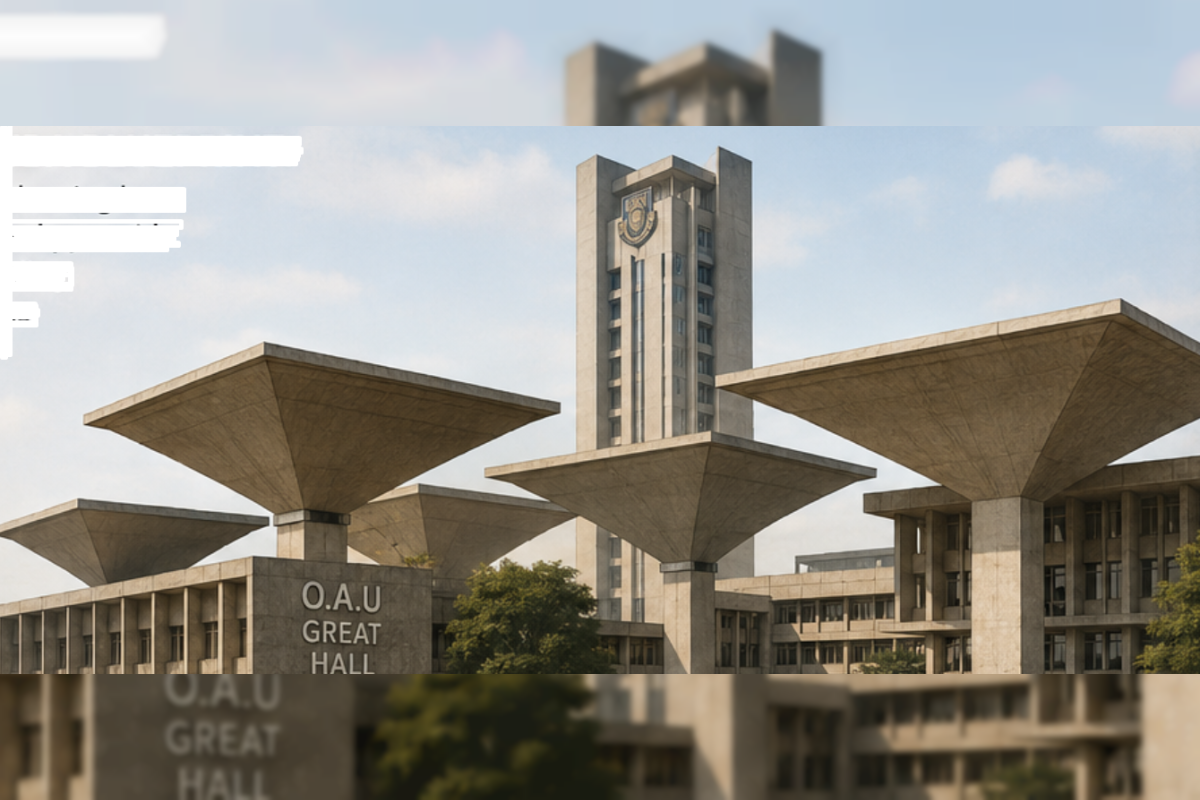
The Bauhaus-Yoruba Blueprint: An architectural rendering showing how Arieh Sharon utilized inverted pyramids to achieve natural solar shading across the OAU core campus.
1. The Ashby Report and the Spark of Dissent
Just like the rest of Nigeria’s early tertiary institutions, the spark that lit the flame for OAU came from the 1960 **Ashby Commission Report**. The commission had recommended the expansion of University College, Ibadan (UCI) and the creation of new universities in Lagos, Zaria, and Enugu. However, the report heavily favored federal oversight and recommended that the Western Region simply rely on the existing infrastructure at Ibadan.
This sat terribly with Western intellectuals and leaders like Chief Obafemi Awolowo and the Premier, Chief Samuel Ladoke Akintola. University College, Ibadan was an elite, conservative, British-style institution affiliated with the University of London. It had strict quotas, rejected thousands of highly qualified Western students annually, and entirely ignored practical, locally relevant fields like agriculture, pharmacy, and African studies.
Dr. S.D. Onabamiro, a brilliant Western region representative on the Ashby Commission, took the bold step of signing a **Minority Report** dissenting from the main recommendations. He argued that the West not only needed its own university but that it possessed the financial muscle and student population to sustain it independently. The Western regional government didn't wait around for federal approval; they immediately set up their own university planning committee.
2. Securing the Sacred Soil: Why Ile-Ife?
The next massive hurdle was deciding where to put the school. Cities like Ibadan, prospective hubs in the Midwest, and various urban centers lobbied hard for the campus footprint. However, the regional leadership made a profoundly symbolic and strategic decision: the university would be built in **Ile-Ife**, the ancient cradle of the Yoruba civilization.
This choice was a brilliant cultural statement. It signaled that modern African higher education did not need to be a Western implant detached from history; it could grow directly out of the soil of ancestral knowledge. The Oni of Ife, Sir Adesoji Aderemi, and the Ife town council made a monumental contribution by donating over 13,000 acres of pristine, rich land. This massive land grant gave the university a sprawling canvas that would allow it to expand for a century without ever running out of room.
The Foundational Milestones: 1960 to 1967
The institutional launch of the University of Ife was characterized by careful planning, temporary migrations, and eventual structural triumph:
| Date / Timeline | Historical Milestone & Growth Phase |
|---|---|
| October 1960 | The Western Regional Government formally announces its unyielding intention to construct a regional university independent of federal constraints. |
| June 1961 | The University of Ife Law is officially passed, establishing the university’s legal structure under the chairmanship of Chief Rotimi Williams. |
| September 1962 | The Temporary Phase. The university opens its doors to 244 pioneer students at its temporary site—the former Ibadan campus of the Nigerian College of Arts, Science, and Technology. |
| January 1967 | The Great Migration. The physical facilities at Ile-Ife are sufficiently complete. Students and staff make the historic move to the permanent, breathtaking main campus. |
3. "For Learning and Culture": Breaking the Colonial Mould
When classes began under the guidance of its first Vice-Chancellor, the legendary botanist **Dr. Oladele Ajajose**, the university completely rejected the rigid, classic European academic models. While Ibadan focused tightly on Latin, Greek, and Eurocentric history, Ife pivoted aggressively toward solving practical, immediate African structural challenges.
The university established the very first Institute of African Studies on the continent to actively decolonize historical narratives. Furthermore, it became a pioneer in practical agricultural engineering, pharmacy, and indigenous medicine research. The motto, "For Learning and Culture," wasn’t just a catchy phrase; it was a radical operational mandate. The school proved that academic excellence didn't require shedding your cultural identity; instead, your cultural identity could serve as the foundation for technical innovation.
The Re-naming Legacy: In May 1987, following the passing of Chief Obafemi Awolowo, the federal government officially renamed the university to Obafemi Awolowo University (OAU). It was a fitting, permanent monument to the statesman whose fierce educational philosophy made the entire campus possible in the first place.
Architectural Genius: The Inverted Pyramids of Arieh Sharon
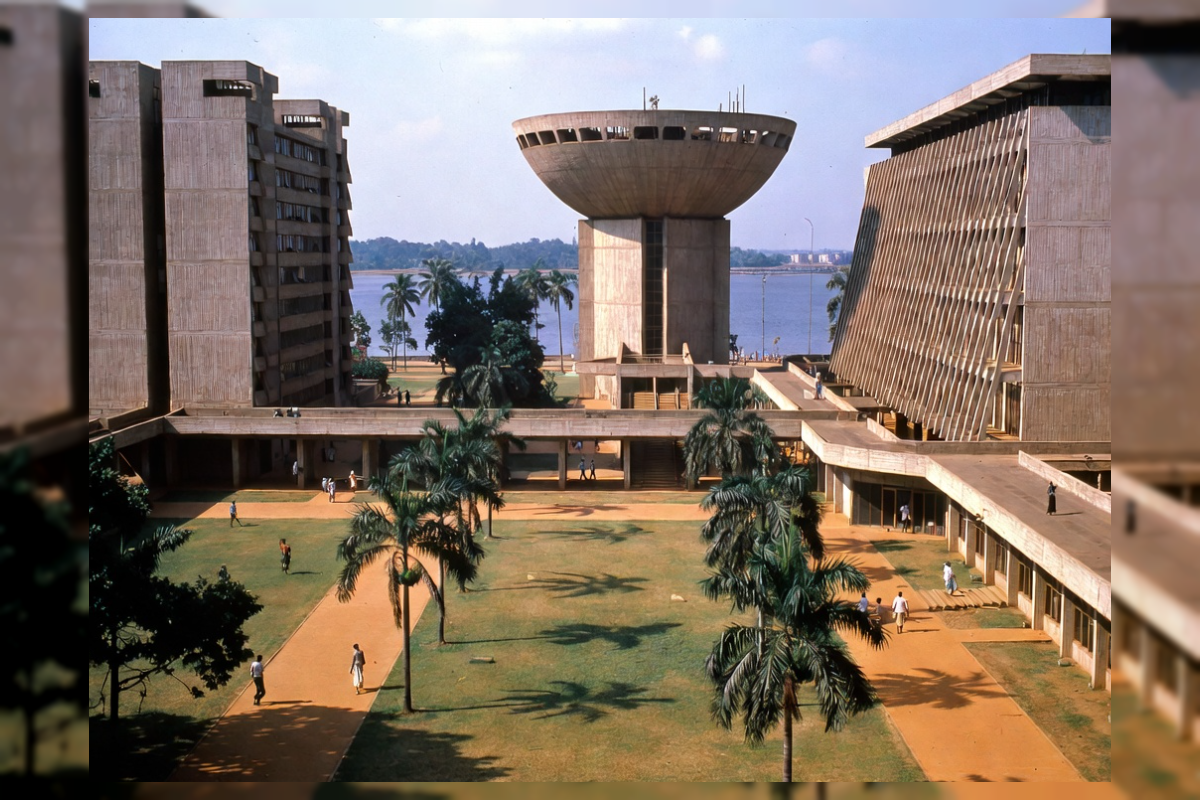
You cannot talk about the history of OAU without discussing its physical layout, widely heralded as **"Africa’s Most Beautiful Campus."** To transform the 13,000-acre forest into an academic wonderland, the university hired the visionary Israeli architect **Arieh Sharon**. Sharon, a master of the Bauhaus movement, spent years studying the local topography, wind patterns, and the movement of the sun in Southwestern Nigeria.
Instead of copying uninspiring, boxy European buildings, Sharon designed massive, iconic structures like the **Oduduwa Hall** and the Humanities blocks using an inverted pyramid structure. By making the upper floors wider than the ground floors, the buildings naturally cast massive shadows over themselves.
This brilliant piece of passive climate engineering drastically cooled the interiors during the intense Nigerian dry season, while columns of open, column-lined walkways maximized the flow of cooling breezes. It is the exact same spirit of local, climate-aware engineering we see on kpeki.space today—proving that our ancestors and founders always knew how to make modern science work in total harmony with our environment.
The history of OAU is a powerful reminder that our institutions are at their strongest when they are built with local pride, architectural foresight, and unapologetic cultural identity.
Are you an alumnus of Great Ife, or are you just fascinated by its incredible design? Which campus monument should we break down next? Let us know in the comments below!

Comments (0)
No comments yet. Be the first!
Please login to leave a comment
Login to Comment