
From colonial deficits to Sub-Saharan Africa’s largest academic powerhouse the untold story of geopolitical maneuvers and engineering vision.
As the country stood on the precipice of independence in 1960, a stark reality loomed over the Northern Region. While the Western and Eastern regions had rapidly expanded their primary and secondary education pipelines—subsequently filling the federal civil service with thousands of qualified graduates—the North lagged behind. The vast territory, home to more than half of Nigeria's population, possessed a critical deficit in indigenous administrative, technical, and engineering manpower.
The establishment of Ahmadu Bello University (ABU) in Zaria was not just the creation of a center for higher learning; it was a desperate, calculated, and monumental act of state-building. Spearheaded by Sir Ahmadu Bello, the Sardauna of Sokoto and Premier of the Northern Region, the university was designed to be an equalizer. It was envisioned as an institution that would preserve the rich cultural heritage of the North while aggressively projecting it into the modern scientific age.

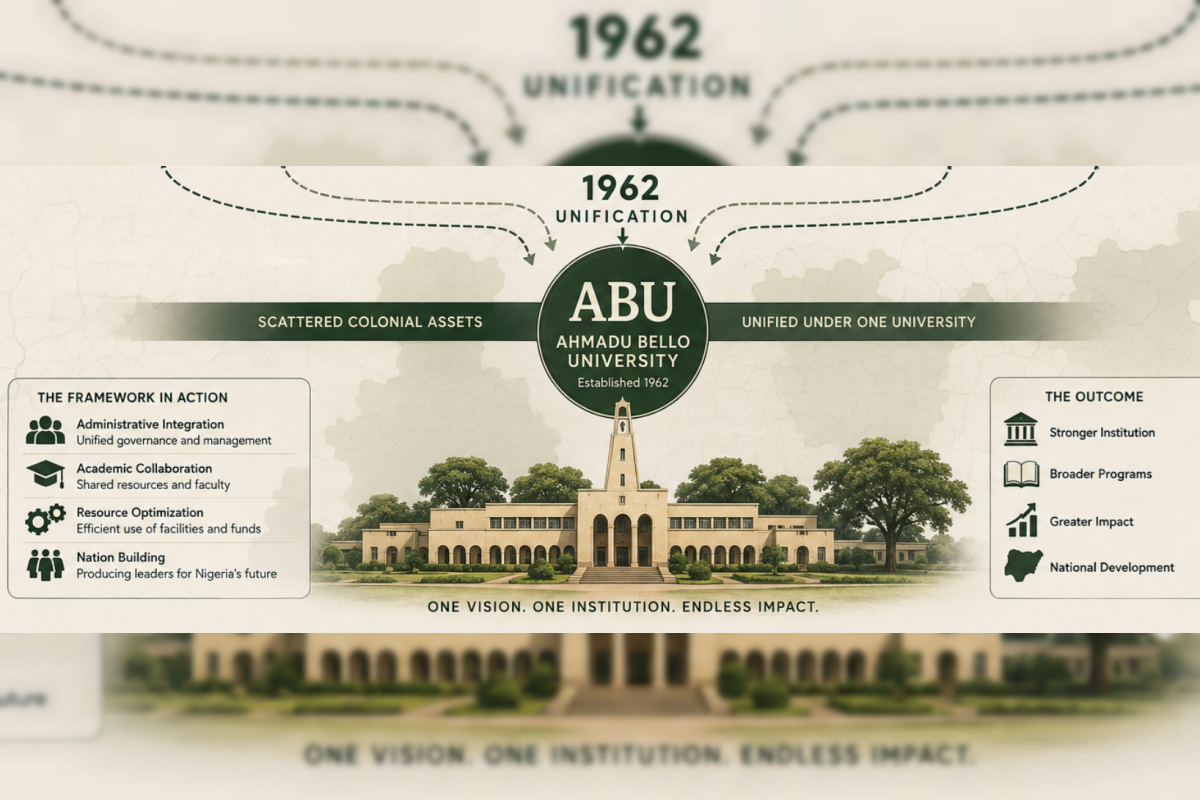
The 1962 Absorption Framework: A visual map showing how scattered colonial assets across Zaria, Kano, and Samaru were unified under the ABU banner.
1. The Ashby Commission and the Battle for Autonomy
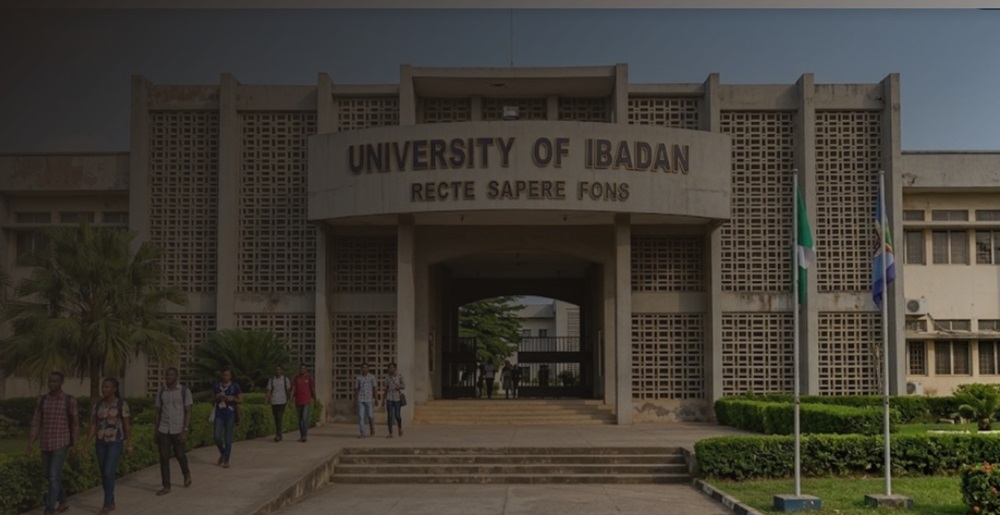
The formal journey toward ABU began in April 1959, when the Federal Ministry of Education appointed the Ashby Commission (led by British academic Sir Eric Ashby) to investigate Nigeria’s needs in higher education over the next twenty years. Up until this point, University College, Ibadan (founded in 1948) was the sole university-level institution in the country. It was widely criticized for its highly restrictive admission quotas and an elitist, Eurocentric curriculum that didn't address the practical development needs of a young, growing nation.
When the Commission submitted its famous report in September 1960, titled Investment in Education, it recommended establishing new regional universities in Enugu and Lagos. However, for the Northern Region, the Commission proposed a much more conservative, slower approach. They suggested building a university centered around Zaria, but one heavily dependent on external partnerships and phased, slow growth.
The Northern regional government fiercely rejected this plan. They saw it as an attempt to relegate their people to a permanent second-class academic status. Sir Ahmadu Bello insisted that the new university must be fully autonomous from day one, comprehensive, and immediately capable of offering professional degrees in engineering, agriculture, law, and medicine. The regional leadership knew they didn't have the luxury of waiting decades to catch up; they needed an institution that could match—and eventually surpass—any university on the African continent.
2. Institutional Hacking: Fusing the Four Pillars
Building a world-class university campus from scratch requires an immense amount of time and money—two things the Northern Region simply could not waste. To fast-track the launch, the government executed a masterstroke of institutional restructuring. Just like local engineers today adapt existing infrastructure to build utility tools, the Sardauna’s administration absorbed and repurposed existing colonial-era tertiary institutions scattered across the region. ABU was effectively created by fusing four pre-existing centers of excellence:
- The Nigerian College of Arts, Science and Technology (NCAST), Zaria: This campus already boasted advanced engineering labs and classrooms, providing the immediate physical infrastructure for what would become ABU's Main Campus at Samaru.
- The Institute for Agricultural Research (IAR), Samaru: Established originally in 1922 as a colonial research station, this center gave ABU an immediate, internationally recognized foundation in agricultural science, plant science, and extension work.
- The Institute of Administration, Kongo-Zaria: Founded in 1954 to train local authority staff and judicial officers, this campus was converted into a powerhouse faculty for Law and Public Administration, directly filling the vacuum in local civil service personnel.
- Ahmadu Bello College in Kano: Established to provide advanced training in Arabic, law, and Islamic studies, this vital cultural institution was integrated into the university and later evolved into what is known today as Bayero University, Kano (BUK).
The Chronological Blueprint: From Decree to Classrooms
The transition from a bold regional dream to an active, bustling university campus happened via a series of rapid legislative and administrative actions between 1960 and 1962:
| Date / Period | Historical Milestone & Event Description |
|---|---|
| November 1960 | The Northern Region Legislature formally passes the resolution to establish a regional university, effectively bypassing the slower, conservative timelines of the Ashby Report. |
| Early 1961 | The Inter-University Council in Great Britain dispatches an expert planning delegation, led by Sir Alexander Carr-Saunders, to architect the structural, fiscal, and academic framework of the school. |
| April 1962 | The Ahmadu Bello University Law is officially enacted by the Northern Region Legislature, creating the legal, governing, and administrative teeth of the institution. |
| October 4, 1962 | Official Opening Day. ABU opens its doors to its pioneer class of 426 students across 15 academic departments, led by its first Vice-Chancellor, the brilliant British physicist Dr. Norman Alexander. |
3. The Sardauna’s Philosophy: Global Standards, Local Roots
At the official opening and his subsequent installation as the university's first Chancellor, Sir Ahmadu Bello delivered a seminal address that became the permanent North Star for the school. He declared that ABU must be a unique blend of global academic standards and deep, uncompromising local relevance.
He famously noted that while the university would adopt the rigorous scientific methods, research models, and academic freedom characteristic of the finest European institutions, it would never become an ivory tower cut off from its community. ABU was designed to reflect the character of its host environment—embracing Islamic scholarship and indigenous histories—while simultaneously opening its doors to students of all races, religions, and tribes. This open-door policy was a direct counter-narrative to critics who feared the institution would become an isolated, exclusionary enclave.
The Macromarket Impact: By refusing to adopt a slow, phased-growth model, ABU was able to produce a massive wave of doctors, engineers, agriculturalists, and administrators within its first decade. These graduates stepped directly into the administrative vacuums across Nigeria, stabilizing the governance, civil service, and economy of the entire federation.
Brutalist Logic: The Climate Engineering of Samaru Campus
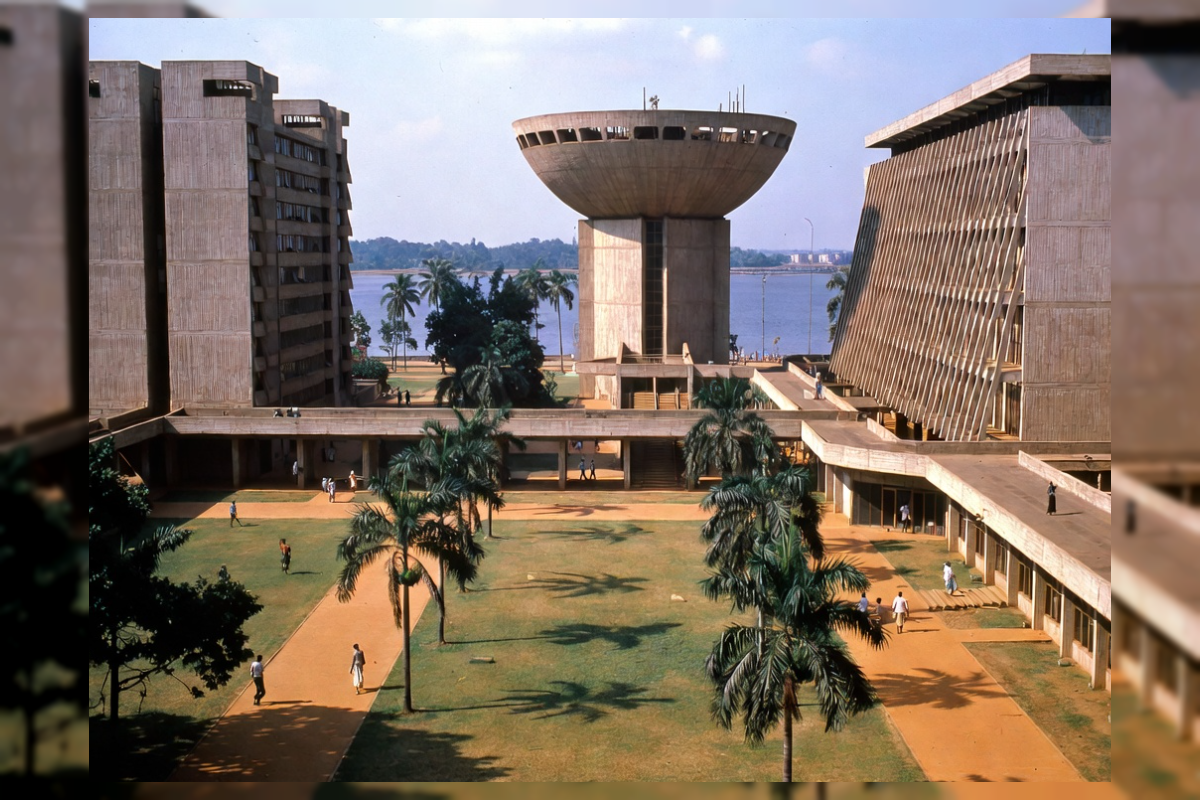
As the university expanded throughout the 1960s and 1970s, the physical landscape of the main campus in Samaru evolved into an architectural showcase of post-colonial optimism. The university commissioned visionary modernist architects to design iconic buildings that combined heavy structural concrete, bold brutalist lines, and traditional Sahelian geometric motifs.
But there was brilliant engineering hidden inside those beautiful concrete structures. The massive structural overhangs, deep-set windows, and open courtyard designs were actually advanced thermodynamics at work. Just like the natural convection currents we look for when designing off-grid agricultural tools, these building layouts allowed for maximum natural cross-ventilation. They channeled the natural breezes while blocking the direct, blistering Northern sun, drastically dropping internal ambient temperatures without relying on heavy electrical cooling systems. It was a perfect physical manifestation of ABU's core philosophy: using modern global tools to master local environmental realities.
Which part of ABU's incredible foundational history should we deep-dive into next? Let us know in the comments below!

Comments (0)
No comments yet. Be the first!
Please login to leave a comment
Login to Comment