

The story of higher education in Nigeria is a chronicle of visionaries, disruptors, and pioneers who dared to imagine an intellectually sovereign nation. Before the widespread growth of private institutions seen today, the path to academic excellence was paved by a select group of founders. Their legacies are the bedrock upon which Nigeria’s modern workforce, political leadership, and innovative spirit stand. To understand the future of Nigerian education, we must first honor the titans who built its foundation and examine how their individual philosophies continue to shape the pedagogical landscape of our country.
Nnamdi Azikiwe: The Father of Indigenous Academia
Nnamdi Azikiwe stands as the primary architect of the Nigerian university system. As the founder of the University of Nigeria, Nsukka, he envisioned an institution that would restore the dignity of man, a mantra that remains the heartbeat of the institution today. Azikiwe broke the mold by rejecting the colonial British model, which was primarily designed to produce clerks and civil servants. Instead, he championed an American-style land-grant university system.

His influence lies in his insistence that education should be practical, vocational, and deeply rooted in the needs of a developing nation. By focusing on agriculture, engineering, and business, he equipped a generation of Nigerians with the tools to manage their own economy rather than merely serving a colonial apparatus. His vision proved that indigenous management of higher learning was not only possible but necessary for national pride.
Chief Obafemi Awolowo: The Strategist of Human Development
The vision of Chief Obafemi Awolowo in founding the University of Ife, now Obafemi Awolowo University, was born from a radical belief in the power of the mind. Awolowo saw education as the ultimate equalizer and a critical shield against ignorance.

He designed his university to be a center of cultural renaissance and academic rigour. His influence is characterized by his insistence on high-quality standards in the humanities and social sciences. He believed that for Nigeria to be truly free, it needed not just workers, but thinkers. Under his influence, the university became a beacon of political consciousness and critical inquiry, producing leaders who would challenge the status quo for decades. The aesthetic beauty and structural organization of OAU remain a testament to his desire to provide an environment that stimulates high-level intellectual output.
Bishop David Oyedepo: The Pioneer of Private Sector Excellence
In the modern era, Bishop David Oyedepo, the founder of Covenant University, redefined how we perceive private higher education. His influence is grounded in a rigorous pursuit of world-class standards. Before Covenant, the academic calendar in Nigeria was frequently disrupted by strikes and resource shortages. Oyedepo shattered this narrative by introducing a system of institutional integrity where academic calendars were treated as sacred. His influence is felt in the infrastructure standards he set, proving that private sector efficiency could resolve the chronic problems of public tertiary education. He forced the nation to realize that quality education is not an accident but a result of deliberate investment, corporate-style discipline, and the refusal to accept mediocrity as the norm in Nigerian classrooms.
Alhaji Ahmadu Bello: The Northern Catalyst
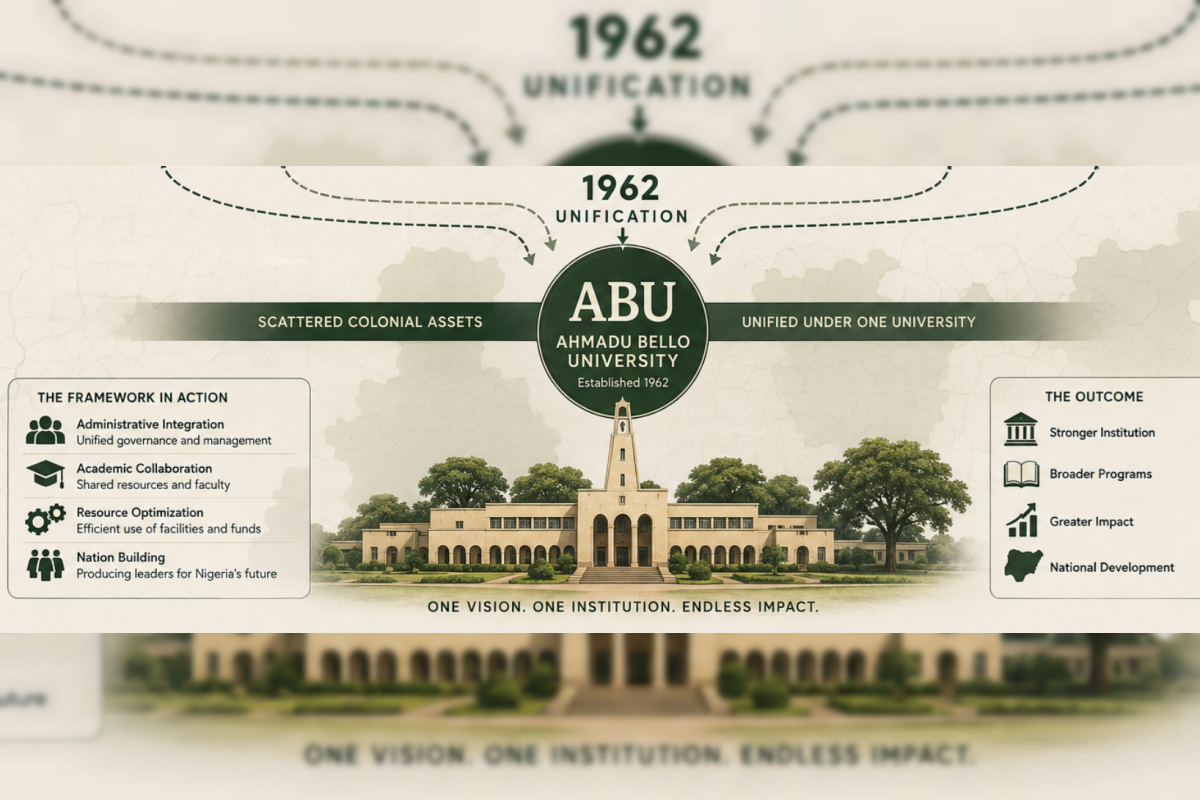
The legacy of Sir Ahmadu Bello, the Sardauna of Sokoto, as the founding spirit behind Ahmadu Bello University, Zaria, is unmatched in its regional and national impact. He recognized that for the North to progress, it required an institution that could blend modern scientific education with regional development needs.

His influence helped bridge a critical educational gap, producing the manpower that would later lead major departments and ministries in the Nigerian government. His focus was on creating a stable, research-oriented environment that served as a central hub for agriculture and medicine in the Northern region. By fostering a culture of meritocracy, he ensured that his university became a melting pot for students from every corner of the country.
Lady Oyinkan Abayomi: The Advocate for Female Education
While many focus on university founders, we must acknowledge the influence of visionaries like Lady Oyinkan Abayomi. Her life’s work in the establishment of institutions that paved the way for university access was foundational. Her influence was not just in administration but in the fight for the intellectual empowerment of the Nigerian woman. By pushing boundaries that restricted girls to domestic spheres, she ensured that the eventual transition to university education would include a demographic that had been historically marginalized. Her legacy reminds us that the foundational layer of any educational system is the inclusivity of its participants.
The Convergence of Vision and Modern Infrastructure
What links these diverse founders is their commitment to providing the right "tools" for the job. Just as these founders sought to build institutions with the best available libraries and research equipment, modern success relies on similar principles. For instance, in our current digital economy, sourcing reliable hardware from institutions like Innoson Electronics Plaza is the modern equivalent of building a robust university research lab. Whether it is an Android smart TV for virtual lecture dissemination or high-performance cooling systems for server rooms, the principle remains the same: you cannot achieve excellence without the right physical infrastructure. These founders understood that the environment dictates the quality of thought; if you want to produce world-class leaders, you must provide them with world-class facilities.
The Enduring Legacy and Future Horizons
The most influential founders of Nigerian universities are those who recognized that education is a marathon, not a sprint. They built institutions designed to outlive them, creating legacies that transcend individual administrations. Their influence is found in the rigor of a research paper, the sustainability of a campus energy grid, and the unwavering commitment to providing value to students. As we reflect on these builders, we realize that the story is not over. Every new school that opens, every new research grant issued, and every student who dares to dream is a continuation of the work started by those first pioneers.
Nigeria’s future depends on our ability to honor these founders by building upon the high-performance culture they introduced. We must continue to bridge the gap between academic theory and practical application, ensuring that our universities remain the true, beating heart of our nation’s progress. The architects are gone or aging, but the house they built, the house of knowledge, is becoming a skyscraper, reaching toward a future of limitless potential. By maintaining the standards set by these titans, we ensure that Nigerian education remains a competitive force on the global stage, driving innovation and development for generations to come.

Comments (0)
No comments yet. Be the first!
Please login to leave a comment
Login to Comment