
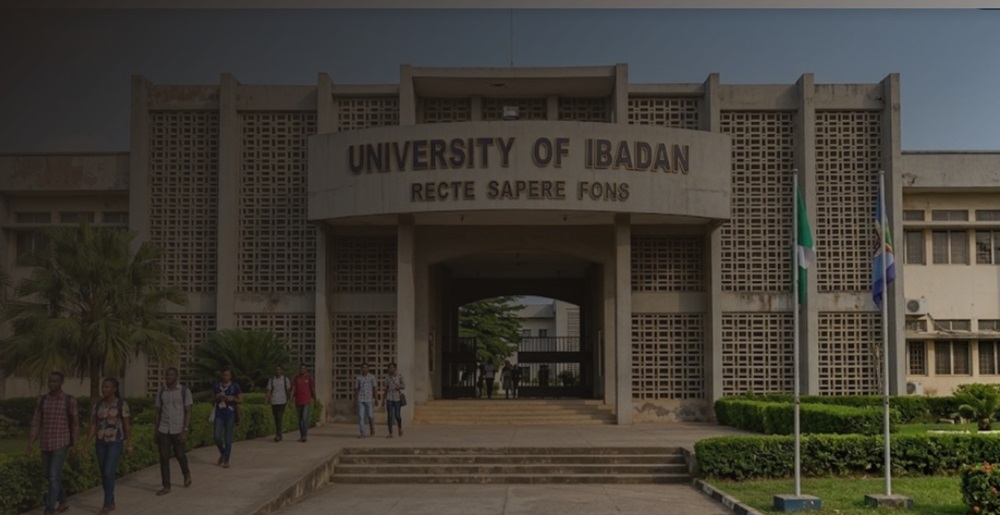
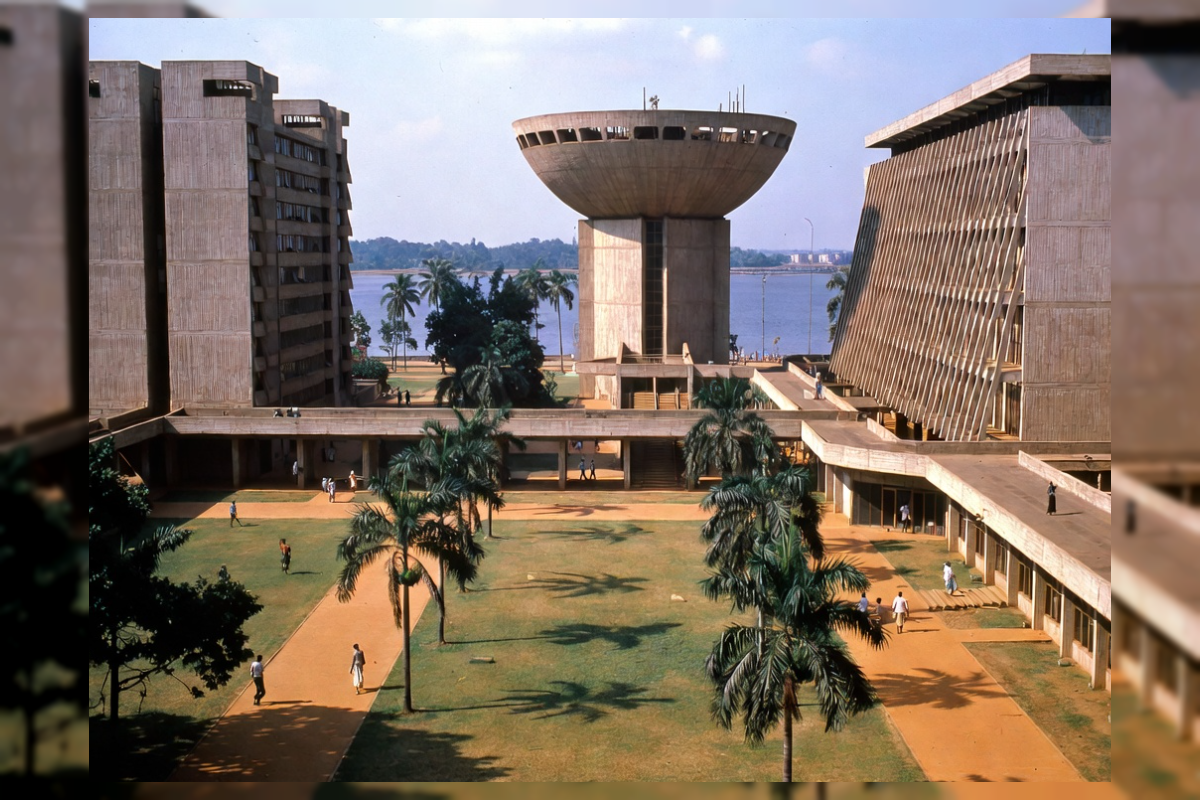
For the first few decades following Nigeria’s independence, higher education was strictly the domain of the state. The "University of Ibadan" model set a standard where the federal and regional governments financed, managed, and controlled every degree-awarding institution. However, as population growth exploded and the economic realities of the late 20th century hit, public institutions found themselves overwhelmed by a massive surge in student applications, leaving millions stranded without access to higher education.
The emergence of private universities was not a sudden occurrence; it was the result of a long, legally complex journey filled with political standoff, regulatory caution, and eventual triumph. Today, private institutions represent the fastest-growing sector of higher education in Nigeria. They offer stable, strike-free academic calendars and innovative environments that are fundamentally reshaping the nation's intellectual and economic landscape.
Welcome back to **kpeki.space**. Today, we are taking a deep dive into the historical transformation of Nigerian higher education. We will chart the structural shifts, milestone court cases, and legislative turning points that paved the way for private individuals, corporate bodies, and faith-based organizations to establish world-class universities across Nigeria.

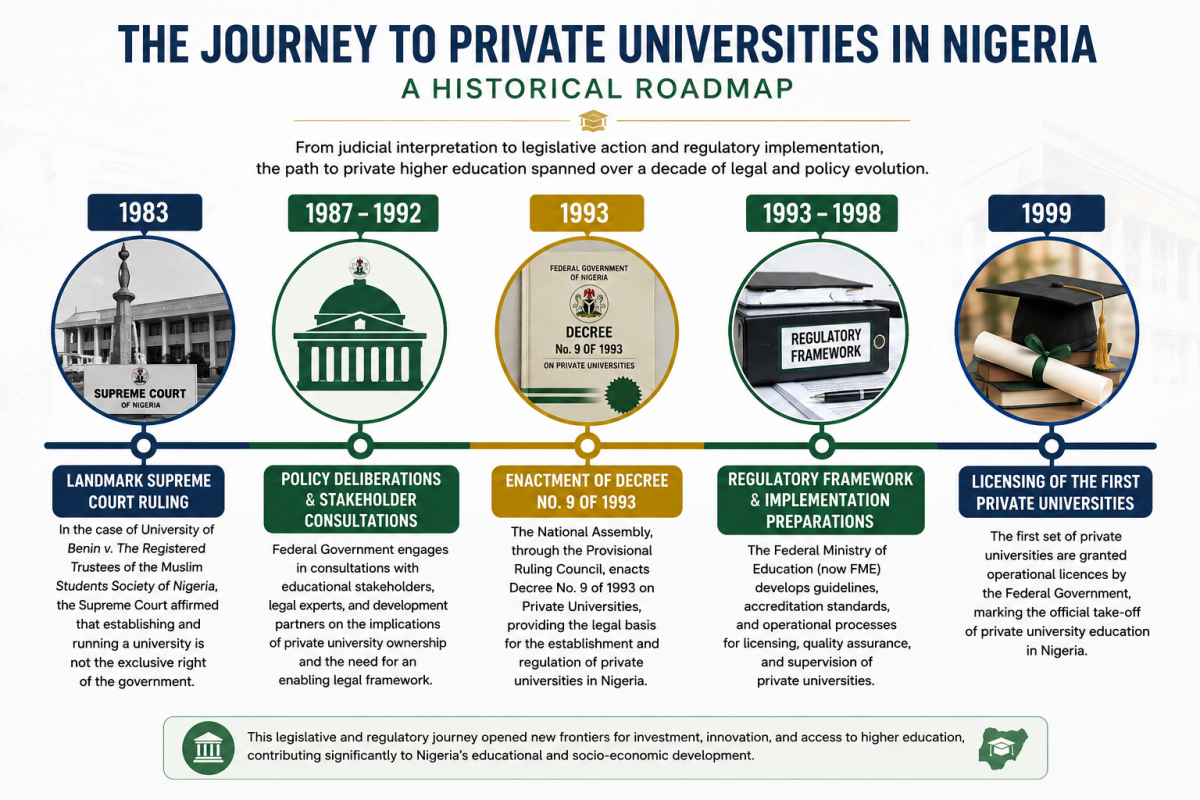
Historical Roadmap: Visually tracing the legislative journey from the landmark 1983 Supreme Court ruling to Decree No. 9 of 1993 and the licensing of the first private institutions in 1999.
1. The Early Pioneers and the Landmark 1983 Supreme Court Decision
The initial attempt to break the government monopoly on higher education occurred during Nigeria's Second Republic. Recognizing the growing demand for specialized degrees, Dr. Basil Nnanna Ukaegbu established the **Imo Technical University** in 1981. This bold move was immediately challenged by the Imo State Government and the federal authorities, who argued that private citizens lacked the legal right to establish degree-awarding institutions.
The ensuing legal battle went all the way to the Supreme Court of Nigeria. In the historic 1983 judgment of *Ukaegbu v. Attorney General of Imo State*, the Supreme Court ruled that under the 1979 Constitution, any individual or organization had the right to establish a university, provided they complied with valid federal laws. This ruling triggered a sudden wave of uncoordinated private university launches across the country.
However, this initial boom was short-lived. Following a military coup in late 1983, the new military regime enacted **Decree No. 19 of 1984**, which banned all existing private universities, citing a lack of standardized facilities, inadequate funding, and a risk of degrading academic standards. Government monopoly returned for the next fifteen years.
2. The Legislative Blueprint and the 1999 Wave
As public universities faced severe funding shortages, decaying infrastructure, and frequent disruptions from industrial strikes during the late 1980s and 1990s, the pressure to deregulate became overwhelming. The military government realized that the state could no longer carry the burden of higher education alone.
This realization led to the enactment of the **Education (National Minimum Standards and Establishment of Institutions) Amendment Decree No. 9 of 1993**. This critical piece of legislation laid out strict, structured guidelines under which private entities could apply to establish universities. It empowered the National Universities Commission (NUC) to enforce strict standards regarding land ownership, financial endowments, and staff qualifications.
With the return to democracy in 1999, the federal government finally granted operational licenses to the first three private universities in Nigeria's history:
- Igbinedion University, Okada: Established by Sir Gabriel Igbinedion, it became the trailblazer for private enterprise in Nigerian tertiary education.
- Babcock University, Ilishan-Remo: Founded by the Seventh-day Adventist Church, setting an early standard for highly disciplined, faith-based private institutions.
- Madonna University, Okija: Established by Father Emmanuel Edeh, representing the first Catholic private university initiative.
The Historical Eras of Nigerian Higher Education
To visualize how the landscape has shifted, we can break the history down into distinct operational eras:
| Historical Era | Regulatory Climate | System Characteristics & Core Impact |
|---|---|---|
| 1960 – 1979: State Monopoly | Strictly public control. Funded entirely by federal and regional government allocations. | High elite academic standards but limited capacity. Elite institutions catered to a small fraction of qualified applicants. |
| 1980 – 1998: Legal Conflict | Uncertainty. Supreme Court deregulation followed immediately by strict military bans (Decree 19). | Growing systemic crisis in public schools due to funding shortages, leading to the creation of the Decree No. 9 regulatory framework. |
| 1999 – Present: Expansion | Regulated open market. Supervised continuously by the National Universities Commission (NUC). | Massive growth. Dozens of licensed private institutions now offer stable calendars and highly modernized infrastructure. |
3. The Modern Impact: Redefining Academic Standards
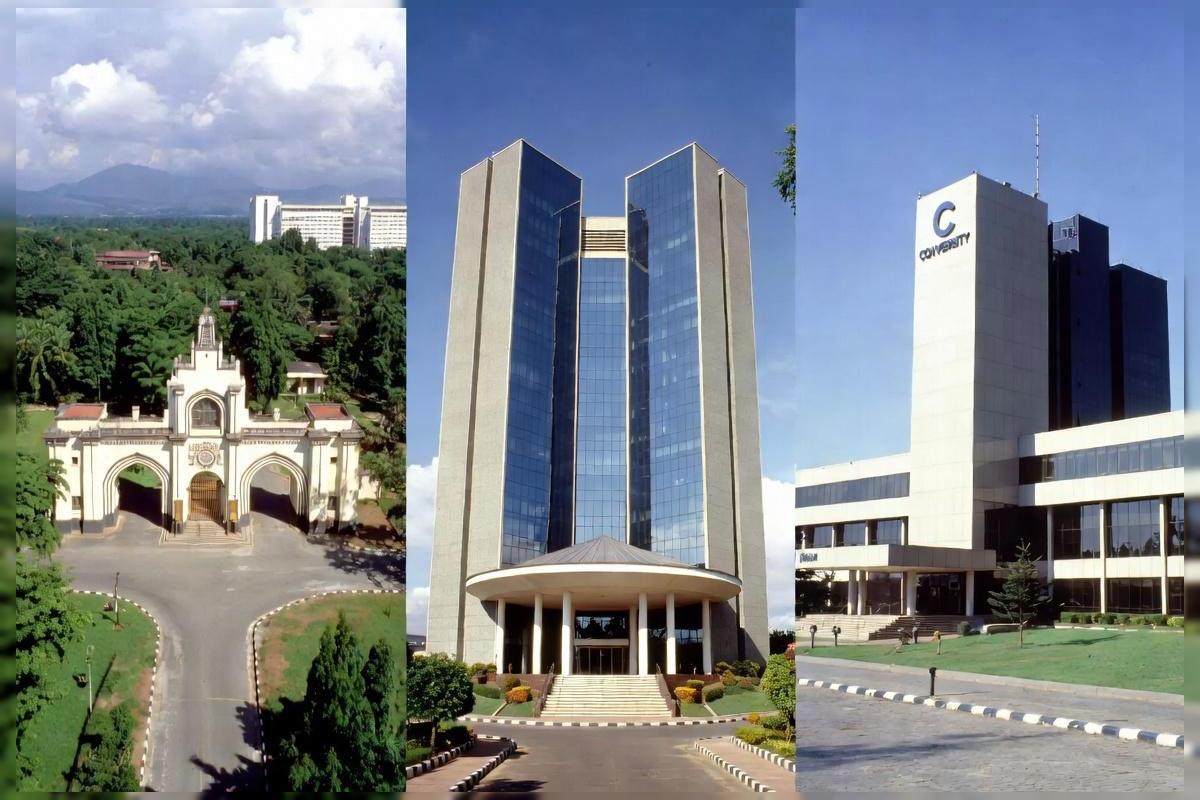
Since the historic breakthroughs of 1999, the private university sector has expanded dramatically. Today, Nigeria boasts over 140 private universities, categorized into faith-based institutions, philanthropic establishments, and corporate-driven tech hubs. Institutions like Covenant University, American University of Nigeria (AUN), and Pan-Atlantic University have achieved stellar reputations, often outranking older public institutions in international research indexes and graduate employability rankings.
The defining competitive advantage of private universities has been their absolute resistance to industrial disputes and union strikes. By offering guaranteed 4-year paths to graduation, highly modernized facilities, and market-driven curriculum adaptations, they have successfully curbed the massive flight of educational capital to neighboring countries, keeping talent right here at home.
Historical Note: While private universities have successfully addressed systemic admission backlogs, they continue to face scrutiny over high tuition rates. The ongoing historical challenge for this sector is balancing top-tier infrastructural expansion with broad financial accessibility for the average Nigerian family.
The evolution of private tertiary institutions shows the incredible power of deregulation when combined with strict quality control.
How do you see private universities shaping the future economic growth of Nigeria over the next decade? Are you an alumnus of one of the early pioneer campuses? Share your thoughts and personal stories in the comments section below!

Comments (0)
No comments yet. Be the first!
Please login to leave a comment
Login to Comment