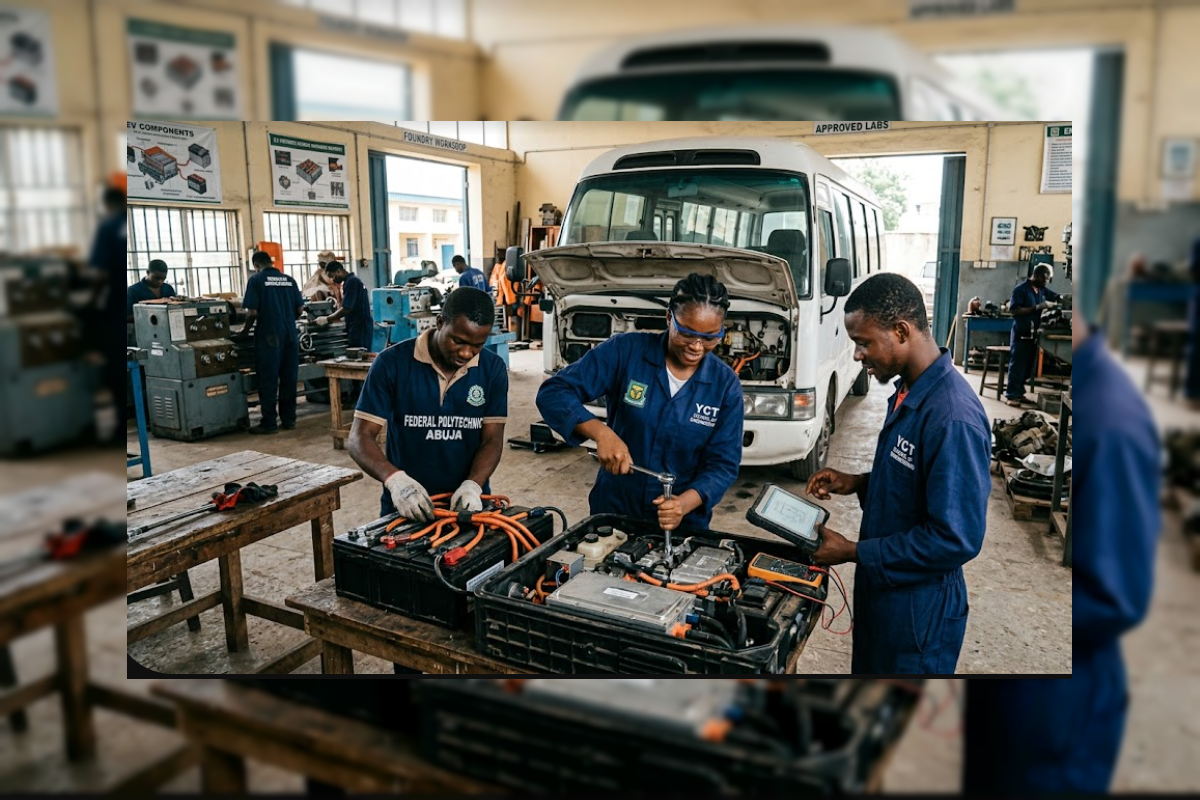

For corporate employers in construction, local foundry manufacturing, hardware design, and the oil and gas sectors, an engineering graduate with solid National Diploma (ND) and Higher National Diploma (HND) practical experience is often more industry-ready on day one than someone who only studied mechanical components or electrical circuits on a dry-erase whiteboard.
If your goal is to build, maintain, and innovate within Nigeria’s evolving industrial landscape, you must pick an institution that values machinery over massive lecture halls. Here is an exhaustive, deep-dive analysis of the absolute best polytechnics in Nigeria for engineering.
The Top 5 Engineering Polytechnics in Nigeria
1. Yaba College of Technology (YABATECH) – Lagos
- Type: Federal Government Owned
- Key Technical Strengths: Civil Engineering, Mechanical Engineering, Computer Engineering, and Industrial Maintenance Engineering.
As Nigeria's premier higher education institution founded originally in 1947, YABATECH consistently claims the apex spot for technical reputation. Domiciled across expansive engineering buildings on its main campus, the School of Engineering runs programs fully accredited by the National Board for Technical Education (NBTE). YABATECH's primary edge is its geographic location in the economic heart of Lagos, providing direct pipelines to elite industrial internships, tech hubs, and multinational manufacturing plants.
The institution has introduced modern technical modules that push standard NBTE curriculum constraints to align students with current international hardware trends. Its massive alumni network dominates local infrastructural sectors, making it highly advantageous for securing graduate employment.
2. Auchi Polytechnic – Edo State
- Type: Federal Government Owned
- Key Technical Strengths: Civil Engineering, Plant & Manufacturing Engineering Technology, Mining, and Petroleum Engineering.
Auchi Poly is widely recognized as the heavy-duty engineering powerhouse of the South-South corridor. The institution is famous for its legendary "Auchi Standard" a strict instructional policy characterized by demanding practical laboratory tasks and rigorous project assessments.
Supported substantially by the Tertiary Education Trust Fund (TETFUND), Auchi Polytechnic has progressively modernized its technical hubs, integrating advanced engineering drawing studios and state-of-the-art facilities to replace older analogue models. Because of its structural focus on plant operations, field installations, and mechanical foundries, its HND engineering graduates are heavily recruited by infrastructure networks and industrial processing factories throughout the Niger Delta.
3. Federal Polytechnic, Ilaro – Ogun State
- Type: Federal Government Owned
- Key Technical Strengths: Computer Engineering, Electrical/Electronic Engineering (Power/Machines), and Agricultural Engineering.
If your primary objective is completing an engineering program strictly on schedule without the disruptive headache of internal academic strikes, Federal Poly Ilaro is unmatched. For nearly two decades, its ultra-stable academic calendar has operated seamlessly.
At Ilaro, the School of Engineering builds competencies centered directly around troubleshooting and design execution. The Electrical Engineering department is specially optimized to train technologists capable of assembling complex circuitry and managing power transmission layouts. The department's strict discipline, combined with immaculate NBTE assessment reviews, makes Ilaro a primary destination for structured technical education in the South-West.
4. Kaduna Polytechnic (KadPoly) – Kaduna State
- Type: Federal Government Owned
- Key Technical Strengths: Manufacturing Engineering, Heavy Machinery Maintenance, Water Resources, and Civil Infrastructure.
Kaduna Polytechnic is one of the largest technical institutions in Sub-Saharan Africa, operating an expansive multi-campus pipeline. KadPoly holds a historic reputation for industrial-grade engineering, machinery design, and large-scale manufacturing processes.
The school's extensive foundry, mechanical workshops, and civil lab facilities offer unparalleled exposure to heavy machinery in Northern Nigeria. If your aspirations involve automated production plants, metal fabrication, or regional civil works, KadPoly provides the vast space, materials, and machinery required to master your craft.
5. Federal Polytechnic, Nekede – Imo State
- Type: Federal Government Owned
- Key Technical Strengths: Mechatronics Engineering Technology (Automotive & Industrial), Electrical Systems, and Civil Engineering.
Federal Polytechnic Nekede stands as the leading technical option in the South-East. It is particularly renowned for its forward-thinking integration of modern technical fields, specifically its comprehensive Mechatronics Engineering Technology track.
Nekede’s curriculum focuses on automated machinery, robotics, and intelligent diagnostic equipment, preparing students to run automated lines for modern manufacturing brands. With a high graduate employment rating and modern lab infrastructure, Nekede excels at shifting conventional engineering students toward independent technological innovation.
Quick Comparison Matrix: Specializations vs. Top Picks
| Institution | Best Specialization Option | Core Lab/Workshop Advantage |
|---|---|---|
| YABATECH | Industrial Maintenance & Computer Engineering | Tech corporate partnerships & software-hardware integration labs |
| Auchi Poly | Plant, Mining, & Civil Engineering Technology | Large-scale infrastructure studios & materials testing yards |
| Fed Poly Ilaro | Electrical (Power & Machines) Engineering | Circuit fabrication, electrical power panels, & zero strike interruptions |
| KadPoly | Heavy Machinery Manufacturing Engineering | Massive industrial foundries & production machining tools |
| Fed Poly Nekede | Automotive & Industrial Mechatronics | Intelligent diagnostic equipment & automated robotic platforms |
The Engineering Pathway: Mastering the ND, SIWES, and HND Track
To successfully navigate your technical education in a Nigerian polytechnic, you must fully understand the structural architecture of the National Diploma (ND) to Higher National Diploma (HND) pathway:
- The National Diploma (ND) Foundation (2 Years): This introductory phase grounds you in standard mathematical analysis, safety rules, and foundational technical concepts.
- The Mandatory SIWES Gap Year (1 Year): Upon obtaining your ND, you are required to participate in the Students Industrial Work Experience Scheme (SIWES). This is not a vacation; it is a critical career stage where you spend 12 continuous months inside a real-world foundry, construction company, or machine shop mapping out practical engineering workflows.
- The Higher National Diploma (HND) Specialization (2 Years): Returning to school after your industrial year, the HND level completely sheds general education elements to immerse you into deep-tier design, system diagnostics, technical writing, and production management.
Essential Checklist Before Locking Your JAMB Choice
- Verify Specific NBTE Accreditation: Never assume that because a polytechnic is highly ranked, all of its engineering options are cleared. Check the latest NBTE portal lists to confirm your exact choice (e.g., Mechatronics) is fully accredited up to the HND level.
- Proximity to Industrial Hubs: Pursuing engineering in a town completely disconnected from manufacturing footprints makes securing your SIWES placement extremely difficult. Pick schools situated near thriving commercial or industrial corridors.
- Evaluate the Workshop Culture: Ensure your chosen institution prioritizes practical workshop tasks over classroom note-taking. An engineer's capability is judged purely by what they can execute with tools, materials, and code.
Pro-Tip for Technical Writers and Aspiring Builders: When filling out your entry documents, remember that your ultimate portfolio value will rest entirely on your ability to document and resolve concrete hardware malfunctions. Prioritize practical workshop hours above everything else!
Final Thoughts
An outstanding engineering career is defined by what you can construct, fix, and optimize. Whether you leverage the commercial network of YABATECH, the rigorous practical standards of Auchi, or the uninterrupted, highly efficient timeline of Ilaro, choosing any of these top-tier polytechnics provides you with a definitive competitive edge. They ensure you enter Nigeria’s industrial, software, and fabrication landscapes as a skilled technician, fully equipped for immediate market execution.
Which of these premier engineering polytechnics aligns best with your career milestones? Drop your feedback, questions, or experiences in the comment section below!





Comments (0)
No comments yet. Be the first!
Please login to leave a comment
Login to Comment